

Derbyan Parakeet

Updated: Jan 3

The Derbyan Parakeet is also known as Lord Derby’s Parakeet. It is one of the most striking and charismatic parrots of Asia.
With its vibrant plumage, expressive face, and intelligent demeanor, this species has captured the admiration of bird enthusiasts around the world. Yet behind its beauty lies a story of survival, struggle, and the urgent need for conservation.
Native to the misty highlands of Southwestern China and the northern regions of India, the Derbyan Parakeet (Psittacula derbiana) once thrived. They could be found in large, noisy flocks across its forested mountain habitat. Today, however, its numbers are steadily declining due to habitat loss and illegal trapping for the pet trade.
A Striking Appearance
The Derbyan Parakeet is a large parrot, measuring about 46–50 cm (18–19.6 inches) in length, with a long, tapered tail that gives it an elegant silhouette. Its plumage is a breathtaking blend of emerald greens, lilac purples, and cool blues, creating a palette that seems almost too vivid to be real.
Distinctive Coloration
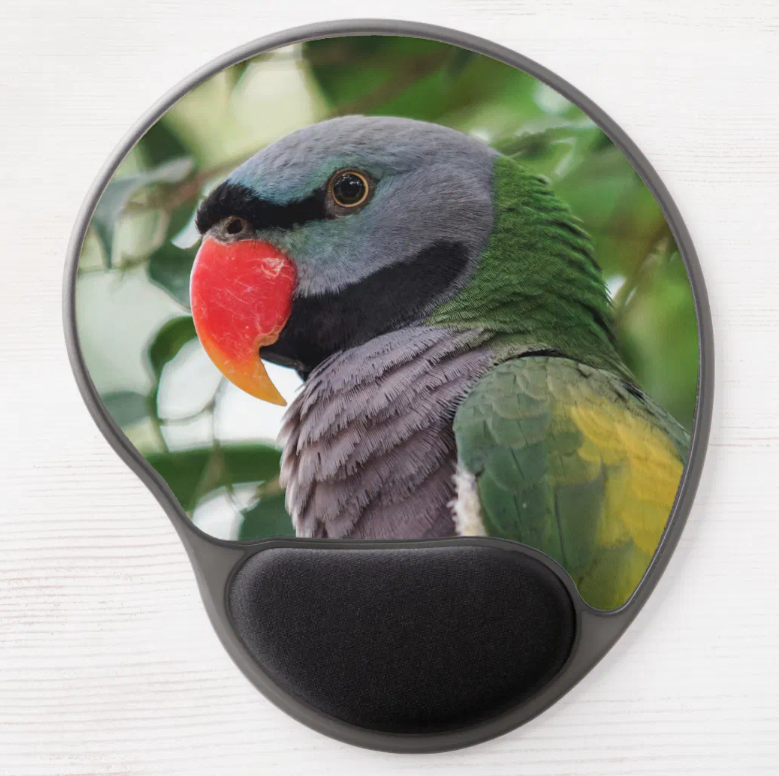
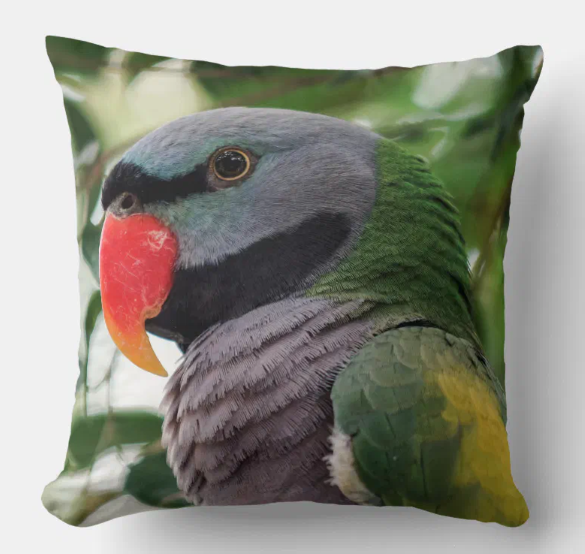
Head and Face: Adults have a grayish-blue face with an iridescent wash of blue-green. A bold black “moustache” stripe runs from the lower cheeks down the neck, giving the bird a dramatic, expressive look.
Body: The breast and abdomen are lilac or purple, while the wings and back are emerald green with yellow-green patches.
Tail: Long and tapered, the tail feathers are primarily blue with hints of green near the base.
Male vs. Female
One of the most fascinating aspects of this species is its clear sexual dimorphism:
Males have a bright coral-red upper mandible tipped in yellow, with a black lower mandible.
Females have an entirely black beak, making them easy to distinguish at a glance.
The Forests of the Asian Highlands
Derbyan Parakeets inhabit a relatively small geographic range. They are found primarily in:

Arunachal Pradesh and Assam in northeastern India
These regions are characterized by:
Moist evergreen forests
Pine and pine-oak woodlands
Mountain slopes reaching elevations up to 4,000 meters (13,000 feet)
The species shows a particular fondness for pine forests, where it feeds on seeds and finds nesting cavities in old trees.
Social Structure and Behavior
Derbyan Parakeets are highly social birds. They form tight-knit flocks that may include dozens of individuals. Their vocalizations are loud, sharp, and carry long distances. This is important for communication in the dense forests.
Intelligence and Personality
Like many parrots, Derbyans are exceptionally intelligent. They are known for:
Problem-solving abilities
Strong pair bonds
Playful behavior
Curiosity and alertness
In captivity, they are often described as affectionate, interactive, and capable of learning a variety of sounds and behaviors.
Breeding and Nesting Habits
In the wild, Derbyan Parakeets rely heavily on old-growth trees for nesting. They prefer natural cavities high above the ground, where they lay clutches of 2–4 eggs.
This dependence on mature trees is one of the reasons deforestation has such a devastating impact on their population. When old trees are cut down, suitable nesting sites disappear.
A Species in Decline
Although the Derbyan Parakeet has a relatively large geographic range, its population is declining due to several major threats.
Habitat Loss
Logging and deforestation are destroying essential nesting sites and reducing available food sources.
Illegal Wildlife Trade
The species is heavily targeted for the cage-bird trade. Its beauty and rarity make it a prized possession among collectors, driving poaching and illegal trapping.
Fragmentation of Populations
As forests shrink and become fragmented, flocks become isolated, reducing genetic diversity and making the species more vulnerable to disease and environmental changes.
Why Conservation Matters
The Derbyan Parakeet is more than just a beautiful bird; it plays an important ecological role. As seed dispersers, these parrots help maintain the health and diversity of the forests they inhabit.
Protecting them also means protecting:
Old-growth forests
Mountain ecosystems
Countless other species that share their habitat
Conservation efforts include:
Habitat protection
Anti-poaching enforcement
Captive breeding programs
Community education in native regions
The Future of the Derbyan Parakeet
There is hope for this species. Conservation organizations, researchers, and responsible breeders are working to stabilize and increase Derbyan Parakeet populations. Captive breeding programs have been successful, and awareness of the species’ plight is growing.
However, long-term survival depends on:
Protecting natural habitats
Reducing illegal trade
Supporting sustainable forestry practices
Continued monitoring of wild populations
The Derbyan Parakeet is Worth Protecting
The Derbyan Parakeet is a living treasure of the Asian highlands. It is a bird whose beauty is matched only by its intelligence and charm. Whether seen in the wild or admired on a mousepad, it inspires wonder and appreciation.

By learning about the Derbyan Parakeet and supporting conservation efforts, we help ensure that future generations will continue to enjoy their beauty.


Comments